
NC Tanker Endorsement Study Guide: An Overview
Navigating the NC Tanker Endorsement requires understanding bulk liquid/gas transport regulations, enhancing career prospects and earning potential for CDL holders in North Carolina.
What is the NC Tanker Endorsement?
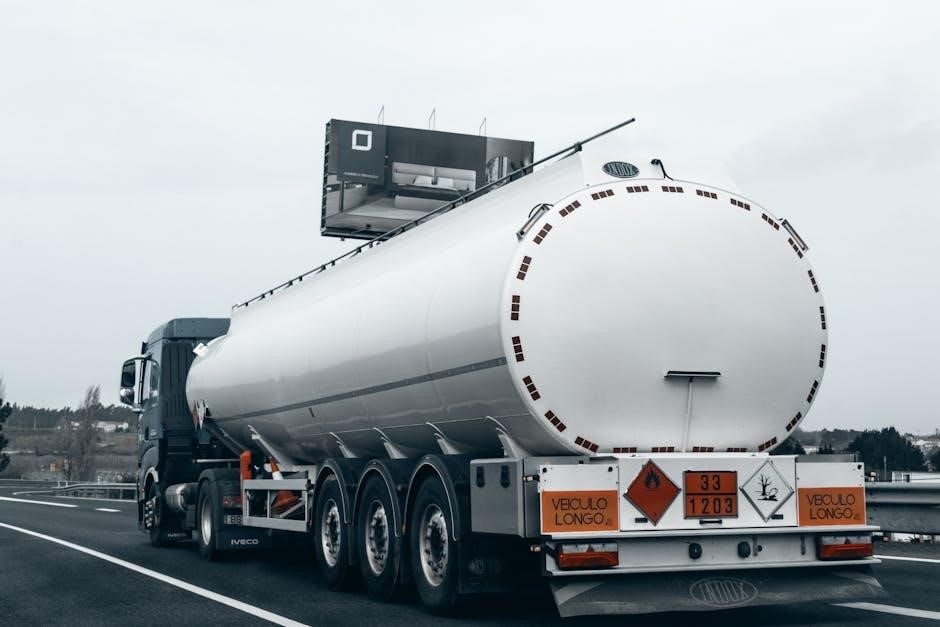
The NC Tanker Endorsement is a crucial certification added to a Commercial Driver’s License (CDL) in North Carolina. This specialized endorsement legally permits drivers to operate vehicles specifically designed for transporting liquids or gases in bulk quantities. It’s more than just a license addition; it signifies a driver’s competency in handling the unique challenges associated with large volume liquid cargo.
Successfully obtaining this endorsement demonstrates a driver’s understanding of safe operating procedures, adherence to Federal Motor Carrier Safety Administration (FMCSA) regulations, and the ability to manage the specific risks involved in tanker transport. This certification opens doors to a wider range of commercial driving opportunities.
Why Obtain a Tanker Endorsement in North Carolina?
Securing a Tanker Endorsement in North Carolina significantly broadens career opportunities within the commercial driving sector. Many industries, including fuel transportation, chemical delivery, and agriculture, require drivers with this specific qualification. This increased demand often translates to higher earning potential compared to standard CDL positions.
Furthermore, possessing a Tanker Endorsement demonstrates a commitment to safety and regulatory compliance. It assures employers and the public that a driver is adequately trained to handle the unique challenges of transporting bulk liquids and gases, contributing to safer roadways and responsible cargo handling throughout the state.
Eligibility Requirements for the NC Tanker Endorsement
Applicants must hold a valid CDL, meet age and driving record standards, and successfully pass a knowledge test focused on tanker-specific operational challenges.
Basic CDL Requirements
To qualify for the NC Tanker Endorsement, possessing a current and valid Commercial Driver’s License (CDL) is fundamental. This CDL must be appropriate for the vehicle class you intend to operate – Class A, B, or C – depending on the Gross Vehicle Weight Rating (GVWR).
Furthermore, drivers must meet all standard CDL requirements, including holding a valid driver’s license from North Carolina (or a comparable state), demonstrating proficiency in general CDL knowledge, and successfully completing the required skills tests.
Essentially, the Tanker Endorsement builds upon an existing CDL; it doesn’t replace the foundational requirements for commercial driving privileges within the state.
Age and Driving Record
Applicants for the NC Tanker Endorsement must meet specific age and driving record criteria. Generally, you must be at least 21 years old to obtain a CDL with a Tanker Endorsement, though some exceptions may apply for interstate commerce.
A clean driving record is crucial. The North Carolina Division of Motor Vehicles (NCDMV) will scrutinize your history for disqualifying offenses, including major traffic violations, DUI/DWI convictions, and license suspensions or revocations.
Points accumulated on your driving record and any history of reckless driving will be carefully considered, potentially impacting your eligibility for the endorsement.

The NC Tanker Endorsement Knowledge Test
Passing the 20-question NC Tanker test requires a score of at least 16 correct answers (80%), focusing on the unique challenges of bulk liquid cargo.
Test Format and Scoring
The North Carolina Tanker Endorsement knowledge test is a computer-based assessment consisting of 20 multiple-choice questions. These questions are designed to evaluate your understanding of the specific challenges and regulations associated with operating tank vehicles. Applicants must achieve a passing score of at least 80% to successfully obtain the endorsement, meaning correctly answering a minimum of 16 questions is crucial.
The test covers a range of topics, including the characteristics of tank vehicles, proper cargo handling procedures, relevant hazardous materials regulations, and essential safety protocols. Thorough preparation using the NC CDL Handbook and practice tests is highly recommended to ensure a comprehensive grasp of the material and maximize your chances of success on the exam.
Key Topics Covered on the Test
The NC Tanker Endorsement test heavily emphasizes understanding tank vehicle characteristics – like surge, bounce, and static rollover threshold – and how these impact vehicle control. A significant portion focuses on Hazmat regulations specifically pertaining to tankers, including proper placarding, shipping papers, and emergency response procedures.
Furthermore, expect questions on safe cargo handling techniques, pre-trip inspection procedures tailored for tankers, and security protocols to prevent unauthorized access or tampering. Knowledge of bulk liquid cargo challenges, like free surface effect, is also vital for passing the exam and operating safely on North Carolina roadways.
Understanding Tank Vehicle Characteristics
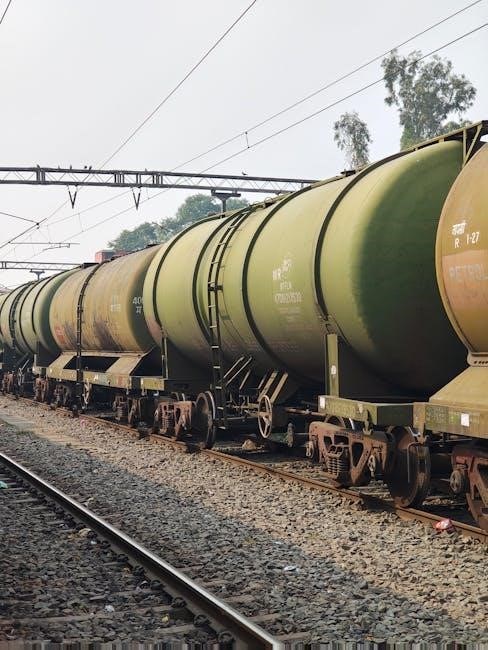
Tank vehicles behave differently than standard trailers due to the shifting of liquid cargo. Key concepts include ‘surge,’ the momentum of liquid moving forward during braking, and ‘bounce,’ vertical oscillation affecting stability. Understanding the ‘static rollover threshold’ – the point at which a tank vehicle becomes unstable – is crucial for safe operation.
Drivers must learn how these characteristics impact handling, especially during turns, braking, and acceleration. The test assesses knowledge of how cargo load affects stability and the importance of smooth, controlled maneuvers to mitigate risks associated with bulk liquid transport in North Carolina.
Hazmat Regulations and Procedures (Related to Tankers)
Transporting hazardous materials in tankers necessitates strict adherence to Federal Motor Carrier Safety Administration (FMCSA) regulations. This includes proper placarding, shipping papers, and emergency response information. Drivers must understand compatibility rules to prevent dangerous reactions between different materials loaded within the tank.
The NC Tanker Endorsement test covers procedures for handling leaks and spills, including notification requirements and containment strategies. Knowledge of securement protocols, loading/unloading safety, and pre/post-trip inspection procedures specific to hazmat tankers is essential for compliance and safe operation within North Carolina.
Cargo Handling and Security
Safe cargo handling for tankers involves understanding the unique challenges of liquid and gaseous loads, including surge and sway effects. Proper loading and unloading procedures are critical to prevent spills and maintain vehicle stability. Drivers must be aware of weight distribution and its impact on handling characteristics.
Security protocols are paramount, requiring drivers to inspect tanks for tampering and report any suspicious activity. Understanding regulations regarding tank vehicle parking and attendance is crucial to prevent unauthorized access. Maintaining accurate records and adhering to chain-of-custody procedures are vital components of cargo security.

Preparing for the NC Tanker Endorsement Test
Success hinges on utilizing the NC CDL handbook, practicing with available tests, and grasping the complexities of handling bulk liquid cargo effectively.
Utilizing the North Carolina CDL Handbook
The North Carolina CDL Handbook is your primary resource for mastering the tanker endorsement. It details specific regulations, safe operating procedures, and crucial information regarding bulk liquid cargo. Thoroughly review the sections dedicated to tanker vehicles, focusing on the unique challenges they present.
Pay close attention to chapters covering vehicle inspection, cargo loading/unloading, and emergency procedures. Understanding the characteristics of tank vehicles – like surge and sway – is vital. The handbook provides a comprehensive overview of the knowledge test content, ensuring you’re well-prepared.
Don’t simply read; actively study and take notes. Familiarize yourself with the terminology and concepts presented, as they will be directly tested. Consistent review of the handbook is key to success.
Practice Tests and Study Guides
Supplementing the NC CDL Handbook with practice tests and study guides is crucial for endorsement success. These resources offer realistic exam simulations, identifying knowledge gaps and reinforcing learned concepts. Numerous online platforms provide tanker-specific practice questions, mirroring the test’s format and difficulty.
Focus on areas where you consistently struggle, reviewing the corresponding sections in the handbook. Study guides often condense key information, providing a quick reference for essential facts. Aim to consistently score above 80% on practice tests before attempting the official exam.
Remember, practice builds confidence and familiarity, significantly increasing your chances of passing.
Understanding Bulk Liquid Cargo Challenges
Operating tank vehicles presents unique challenges compared to standard cargo transport. Bulk liquids exhibit surging – the momentum of liquid sloshing during braking or turns – impacting vehicle stability. Proper load distribution and understanding a tank’s center of gravity are vital for safe handling.
Drivers must also be aware of baffle systems designed to mitigate surging, and the potential for rollovers due to high centers of gravity. Emergency procedures differ significantly, requiring specialized knowledge of tank venting and containment. Mastering these concepts is essential for passing the NC Tanker Endorsement test.
Specific Regulations for Tanker Vehicles in North Carolina
North Carolina mandates specific procedures for loading, unloading, and inspecting tanker vehicles, ensuring compliance with FMCSA regulations and safe cargo handling.
Loading and Unloading Procedures
Safe loading and unloading are paramount when operating tanker vehicles in North Carolina. Drivers must adhere to strict protocols to prevent spills, leaks, and overloads. Before commencing, a thorough inspection of the tank and associated equipment is crucial, verifying compatibility with the cargo.
During loading, monitoring fill levels and ensuring proper grounding to prevent static discharge are essential. Unloading requires careful attention to pressure relief valves and connection security. Following established facility procedures and utilizing appropriate personal protective equipment (PPE) are non-negotiable. Detailed records of loading and unloading operations must be maintained for compliance and accountability.
Inspection Requirements for Tankers
Comprehensive inspections of tanker vehicles are legally mandated and critical for safety in North Carolina. Pre-trip inspections must cover the tank’s integrity – looking for dents, corrosion, or leaks – alongside all valves, hoses, and fittings. Securement of the tank to the chassis is vital, checking mounting brackets and straps.
Post-trip inspections verify no cargo loss occurred and identify any damage sustained during transit. Drivers must meticulously document all inspection findings, reporting any defects immediately. Regular, scheduled maintenance, as per FMCSA guidelines, is also essential for maintaining tanker vehicle safety and compliance.
Hazmat Endorsement Considerations (Often Combined)
Frequently, the Tanker and Hazmat endorsements are pursued together, necessitating background checks and specialized training for handling hazardous materials safely.
Relationship Between Tanker and Hazmat Endorsements
The NC Tanker and Hazmat endorsements often go hand-in-hand, as many bulk liquids and gases transported require both certifications. While the Tanker endorsement focuses on the unique handling characteristics of large-volume liquid cargo – like surge and sway – the Hazmat endorsement addresses the regulations and safety procedures for transporting hazardous materials.
Drivers frequently need both to operate legally and safely. Obtaining both requires separate knowledge tests, but studying for one can often aid in understanding the other, due to overlapping safety concerns. A driver transporting gasoline, for example, needs the Tanker endorsement to drive the vehicle and the Hazmat endorsement to legally carry the flammable liquid.
Background Checks for Hazmat
Securing a Hazmat endorsement in North Carolina involves a thorough background check conducted by the Transportation Security Administration (TSA). This isn’t simply a driving record review; it’s a comprehensive investigation into criminal history and security threat assessments. The TSA verifies identity and checks against terrorist watchlists to ensure public safety.
Applicants must provide fingerprints and undergo a security threat assessment, which includes checks with various law enforcement databases. Disqualifying offenses can include certain criminal convictions and outstanding warrants. Successful completion of this background check is a mandatory prerequisite before taking the Hazmat knowledge test.

Resources for NC Tanker Endorsement Information
The NCDMV website and approved commercial driving schools offer vital resources, study materials, and training for obtaining your NC Tanker Endorsement successfully.
North Carolina Division of Motor Vehicles (NCDMV) Website
The North Carolina Division of Motor Vehicles (NCDMV) website is the primary official source for all tanker endorsement information. Here, you’ll find the current CDL handbook, which details specific requirements, regulations, and testing procedures for the tanker endorsement in North Carolina.
Crucially, the NCDMV website provides access to practice tests designed to simulate the actual knowledge exam. These tests are invaluable for self-assessment and identifying areas needing further study. You can also locate forms, fee schedules, and office locations for convenient access to services. Regularly checking the NCDMV site ensures you have the most up-to-date information regarding any changes in regulations or procedures.
Commercial Driving Schools in North Carolina
Enrolling in a reputable commercial driving school in North Carolina can significantly enhance your preparation for the tanker endorsement test. These schools offer structured courses specifically designed to cover all the necessary knowledge and skills related to tanker vehicle operation and safety.
Experienced instructors provide hands-on training and guidance, addressing key topics like cargo handling, hazardous materials regulations (if pursuing a combined endorsement), and vehicle inspection procedures. Many schools offer practice tests mirroring the official NCDMV exam, allowing you to assess your readiness. Choosing an accredited school ensures quality instruction and increases your chances of successfully obtaining the endorsement.
Write Reviews
Leave a Comment
No Comments & Reviews