Omaha Steaks Prime Rib Cooking Instructions: A Comprehensive Guide
Omaha Steaks provides detailed guides and charts for perfectly cooked prime rib roasts, covering various methods from oven roasting to reverse searing techniques.
Achieving desired doneness—rare, medium-rare, medium, or well-done—relies on precise temperature monitoring and utilizing a reliable meat thermometer for optimal results.
Their resources emphasize searing at high temperatures initially, followed by slow roasting, and offer helpful tips for calculating cooking times based on the roast’s weight.
Omaha Steaks also shares a simple pan gravy recipe and seasoning recommendations, ensuring a flavorful and juicy prime rib experience every time you cook.
Understanding Omaha Steaks Prime Rib
Omaha Steaks’ prime rib isn’t just a cut of beef; it represents a commitment to quality, beginning with carefully selected cattle and expert butchering techniques. Their prime rib roasts are known for abundant marbling, which translates to exceptional tenderness and flavor when cooked properly.
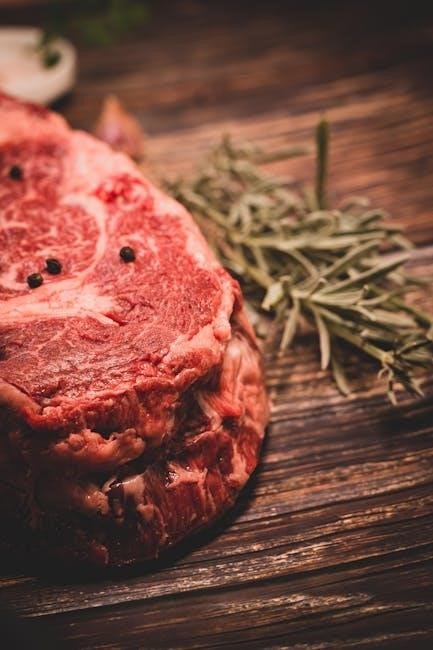
Understanding the cut itself is crucial. Prime rib comes from the rib section of the cow, specifically ribs six through twelve, and is prized for its rich, beefy taste. Omaha Steaks offers both bone-in and boneless options, each with slightly different cooking characteristics. Bone-in roasts are believed to impart more flavor during cooking, while boneless roasts are easier to carve.
The quality grading of Omaha Steaks’ prime rib is consistently high, ensuring a premium eating experience. Knowing this foundation allows home cooks to confidently approach the cooking process, understanding that a superior product will yield superior results with the right techniques. Proper preparation and cooking methods are key to unlocking the full potential of this exceptional cut.
Types of Omaha Steaks Prime Rib Roasts Available
Omaha Steaks caters to diverse preferences with a variety of prime rib roast options. Customers can choose between bone-in and boneless cuts, each offering a unique culinary experience. Bone-in roasts, often preferred for their enhanced flavor during cooking, retain the rib bones for added richness.
Weight options range considerably, from smaller 4-5 lb roasts ideal for intimate gatherings to larger 6-8 lb roasts suitable for larger celebrations. Omaha Steaks also frequently offers seasoned prime rib options, pre-rubbed with their signature blends for convenience. These seasoned roasts simplify preparation without compromising flavor.
Beyond traditional cuts, limited-edition or specialty prime rib offerings may appear seasonally. These could include different aging processes or unique seasoning combinations. Exploring the current selection on the Omaha Steaks website reveals the full spectrum of available choices, allowing customers to select the perfect roast for their needs.
Preparing Your Omaha Steaks Prime Rib for Cooking
Proper preparation is crucial for a succulent Omaha Steaks prime rib. Begin by removing the roast from its packaging and patting it thoroughly dry with paper towels – this promotes a beautiful sear. Allow the roast to sit at room temperature for at least 30-60 minutes before cooking; this ensures more even cooking throughout.
Next, consider trimming any excess surface fat, leaving about ¼ inch for flavor and moisture. Scoring the fat cap in a crosshatch pattern can help it render during cooking. Season generously with your preferred rub or Omaha Steaks seasoning blend, ensuring even coverage.
Place the seasoned roast on a roasting rack set inside a roasting pan. Adding aromatics like onions, garlic, and herbs to the bottom of the pan infuses the roast with subtle flavors. Finally, ensure your oven rack is positioned to accommodate the roast comfortably.
Essential Tools for Cooking Prime Rib
Successfully preparing an Omaha Steaks prime rib requires a few key tools. A high-quality roasting pan with a rack is fundamental, allowing for even heat circulation and preventing the roast from simmering in its own juices. A reliable meat thermometer is absolutely essential for accurately gauging internal temperature and achieving your desired doneness.
Heavy-duty aluminum foil is useful for tenting the roast during resting, preserving moisture and allowing for carryover cooking. Sharp carving knives are vital for creating clean, even slices. A sturdy cutting board provides a safe and stable surface for carving.
Optional, but highly recommended, tools include kitchen twine for trussing the roast, ensuring a uniform shape, and tongs for handling the hot roast. Having these tools readily available streamlines the cooking process and contributes to a perfectly cooked prime rib.
Oven Roasting: The Classic Method
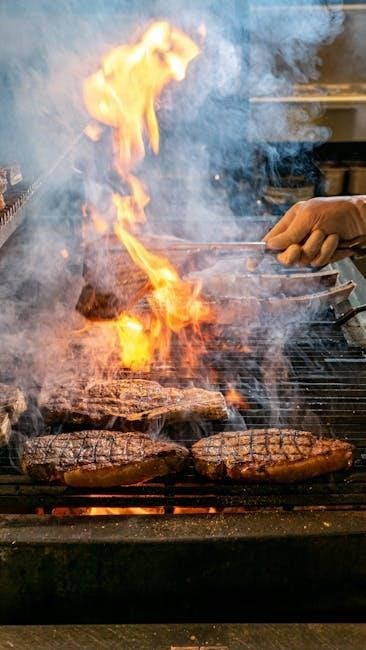
Omaha Steaks’ classic oven roasting method begins with preheating your oven to a high temperature, typically between 450-500°F, to achieve a beautiful sear on the prime rib roast. Place the seasoned roast, bone-side down, on a rack within a roasting pan. This initial high-heat sear, lasting around 30 minutes, creates a flavorful crust.
Following the sear, reduce the oven temperature to a lower setting, generally around 325°F, for slow roasting. This gentle heat ensures even cooking throughout the roast without drying out the exterior. The total roasting time depends on the weight of the roast and your desired level of doneness.
Regularly baste the roast with its own juices during the slow roasting process to maintain moisture and enhance flavor. Consistent monitoring with a meat thermometer is crucial for achieving perfect results.
Initial High-Heat Sear
The initial high-heat sear is a cornerstone of Omaha Steaks’ oven roasting method for prime rib. Preheating your oven to 450-500°F is essential for this step. This intense heat rapidly browns the exterior of the roast, creating a rich, flavorful crust through the Maillard reaction.
Place the seasoned prime rib, bone-side down, directly on a roasting rack within a roasting pan. The bone acts as a natural insulator, helping to prevent overcooking near the bone. Sear for approximately 30 minutes, carefully monitoring to prevent burning.
This searing process isn’t about cooking the roast through; it’s about developing deep, savory flavors and creating an appealing texture. The high temperature quickly seals in juices, contributing to a more tender and flavorful final product.
Reducing Oven Temperature for Slow Roasting
Following the initial high-heat sear, Omaha Steaks recommends significantly reducing the oven temperature to facilitate slow roasting; Lower the heat to 325°F, ensuring even cooking throughout the prime rib without drying out the exterior.
This slower cooking process allows the internal temperature to rise gradually, resulting in a more tender and juicy roast. Continue roasting for a period determined by the weight of the prime rib and your desired level of doneness – refer to the Omaha Steaks cooking chart for precise timings.
Basting the roast periodically with its own juices, or with melted butter, can further enhance moisture and flavor during this stage. Consistent monitoring with a meat thermometer is crucial to achieve your preferred doneness accurately.
Reverse Sear Method for Prime Rib
The reverse sear method, gaining popularity with Omaha Steaks enthusiasts, involves slow-cooking the prime rib at a low temperature before a final, intense sear. Begin by roasting the prime rib uncovered on a rack in a low oven, typically around 225-275°F.
This gentle heat cooks the roast evenly from edge to edge, bringing the internal temperature close to your desired doneness. Use a meat thermometer to monitor progress, removing the roast when it’s about 15-20°F below the target temperature.
Next, increase the oven temperature to a high heat (450-500°F) or utilize a searing method like a cast-iron skillet, to quickly develop a flavorful crust. This final sear creates a beautiful exterior while maintaining a perfectly cooked interior.
Omaha Steaks Prime Rib Doneness Guide & Temperature Chart
Omaha Steaks provides a comprehensive doneness guide and temperature chart to ensure your prime rib is cooked to perfection. Understanding these temperatures is crucial for achieving your preferred level of doneness.
Rare (120-130°F) offers a warm, red center, while Medium-Rare (130-140°F) presents a warm red center with a slightly firmer texture. Medium (140-150°F) delivers a warm pink center, and Medium-Well (150-160°F) features a slightly pink center.
For those who prefer a thoroughly cooked roast, Well-Done (160-170°F) results in a uniformly brown interior. Remember that the temperature will continue to rise slightly during resting, so remove the roast from the oven a few degrees before reaching your target.
Omaha Steaks emphasizes using a meat thermometer for accurate readings, guaranteeing a consistently delicious prime rib experience.
Rare (120-130°F)
Omaha Steaks defines rare prime rib as having a vibrant, warm red center, offering the most tender and juicy experience. This level of doneness is ideal for those who appreciate a pronounced beef flavor and a melt-in-your-mouth texture.
To achieve a rare prime rib, aim for an internal temperature of 120-130°F. It’s crucial to use a reliable meat thermometer inserted into the thickest part of the roast to ensure accuracy. Remember that carryover cooking will raise the temperature slightly during resting.
A rare roast typically requires less cooking time, preserving the natural moisture and tenderness of the meat. Omaha Steaks recommends a shorter initial sear and a shorter overall roasting period for this level of doneness.
Enjoy the exquisite flavor and unparalleled tenderness of a perfectly cooked rare prime rib from Omaha Steaks!
Medium-Rare (130-140°F)
Omaha Steaks considers medium-rare the sweet spot for prime rib, balancing tenderness, juiciness, and robust beef flavor. It features a warm red center that transitions to pink towards the edges, offering a delightful textural experience.
To achieve this popular doneness, aim for an internal temperature of 130-140°F, verified with a meat thermometer inserted into the thickest portion of the roast. Remember carryover cooking will continue to raise the temperature as it rests.
Medium-rare typically requires a slightly longer cooking time than rare, allowing for more even heat distribution while still preserving significant moisture. Omaha Steaks suggests adjusting roasting times accordingly.
This doneness level is perfect for showcasing the quality of Omaha Steaks’ beef, delivering a satisfying and flavorful meal. Enjoy the perfect balance of tenderness and taste!
Medium (140-150°F)
Omaha Steaks defines medium doneness as a prime rib with a warm pink center, offering a balance between tenderness and a more developed beef flavor. It’s a popular choice for those who prefer a less red interior while still enjoying a juicy cut.
To reach this level, aim for an internal temperature of 140-150°F, meticulously checked with a meat thermometer. Remember that the roast will continue to cook during the resting period, increasing the final temperature slightly.
Cooking to medium generally requires a longer roasting time compared to medium-rare, ensuring the center reaches the desired warmth and color. Omaha Steaks provides detailed cooking charts to guide you.
This doneness level provides a satisfying experience for those who appreciate a more fully cooked, yet still tender, prime rib. It’s a reliable choice for pleasing a variety of palates.
Medium-Well (150-160°F)
Omaha Steaks characterizes medium-well prime rib as having a slightly pink center, representing a significant step towards fully cooked beef. This doneness appeals to those who prefer minimal redness but still desire a reasonably juicy cut.
Achieving a temperature of 150-160°F internally, verified with a meat thermometer, is crucial. Be mindful of carryover cooking during resting, which will elevate the final temperature a few degrees.
Cooking times for medium-well will be longer than for medium or medium-rare, ensuring the center reaches the desired level of doneness. Consult Omaha Steaks’ cooking charts for precise guidance based on weight.
While not as vibrant in color as medium-rare, a medium-well prime rib still offers a pleasant texture and robust beef flavor. It’s a safe choice for those cautious about consuming rarer meats.
Well-Done (160-170°F)
Omaha Steaks defines well-done prime rib as fully cooked throughout, with no pink remaining in the center. This level of doneness is favored by those who prefer their beef with a firm texture and no trace of redness.
Reaching an internal temperature of 160-170°F, confirmed using a reliable meat thermometer, is essential. However, be aware that cooking to well-done can result in a less juicy roast, as more moisture is expelled during the extended cooking process.
Expect significantly longer cooking times compared to rarer levels of doneness. Refer to Omaha Steaks’ detailed cooking charts for weight-specific recommendations to prevent overcooking and dryness.
While well-done prime rib may not exhibit the same tenderness as medium-rare or medium, it still delivers a classic beef flavor. Careful monitoring and proper resting are key to maximizing juiciness.
Calculating Cooking Time Based on Weight
Omaha Steaks emphasizes that a prime rib’s weight is the primary factor in determining its cooking time. Larger roasts naturally require longer cooking durations to reach the desired internal temperature throughout.
Their cooking charts provide estimated times for various weights, categorized by preferred doneness (rare, medium-rare, etc.). These charts serve as a starting point, but individual ovens can vary, so consistent monitoring is crucial.
Generally, a 6lb prime rib will take considerably less time than a 10lb roast. Omaha Steaks suggests adding approximately 13-15 minutes of cooking time per pound for medium-rare doneness.
Always consult Omaha Steaks’ specific charts for your roast’s weight and desired doneness. Remember to account for the initial high-heat sear and subsequent slow-roasting phases when calculating total cooking time.
Using a Meat Thermometer for Accurate Doneness
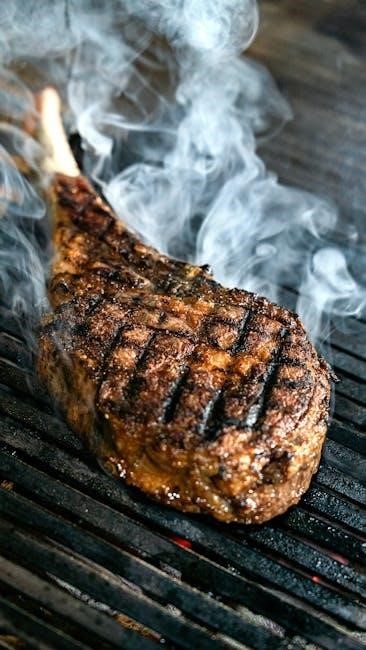
Omaha Steaks consistently stresses the importance of a meat thermometer for achieving perfect prime rib doneness. Relying solely on cooking time can lead to undercooked or overcooked results, diminishing the flavor and texture.
Insert the thermometer into the thickest part of the roast, avoiding bone, fat, or gristle, to obtain an accurate reading. Digital thermometers provide quick and precise temperature measurements, offering greater confidence.
Refer to Omaha Steaks’ doneness chart to identify the target temperature range for your preferred level of doneness – rare (120-130°F), medium-rare (130-140°F), and so on.
Continue cooking until the thermometer registers within the desired range, then remove the roast from the oven. Remember carryover cooking will raise the temperature slightly during resting, so remove it a few degrees early.
Resting the Prime Rib: Crucial for Juiciness
Omaha Steaks emphasizes that resting the prime rib is arguably the most critical step after cooking. This allows the muscle fibers to relax and reabsorb the juices, resulting in a significantly more tender and flavorful roast.
After removing the prime rib from the oven, tent it loosely with foil. Avoid wrapping it tightly, as this can steam the roast and make the crust soggy. Let it rest for at least 15-20 minutes, or even longer for larger roasts.
During resting, the internal temperature will continue to rise by 5-10°F due to carryover cooking. This is why removing the roast slightly before reaching the target temperature is recommended.
Resist the urge to carve into the roast immediately! Patience is key. Proper resting ensures that every slice is incredibly juicy and tender, delivering the premium Omaha Steaks experience.
Carving Your Omaha Steaks Prime Rib
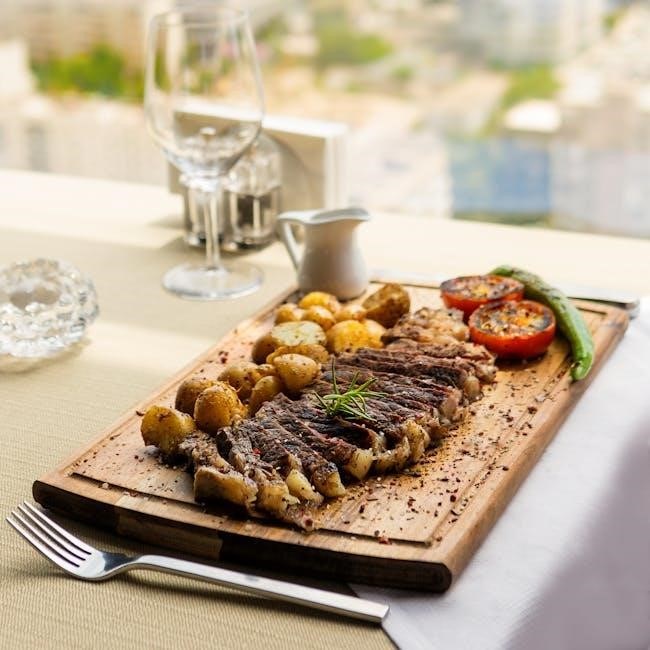
Omaha Steaks recommends carving your prime rib against the grain for maximum tenderness. Locate the direction of the muscle fibers and slice perpendicular to them. This shortens the fibers, making each bite easier to chew.
Begin by removing the roast from the resting board. Using a long, sharp carving knife, start by slicing off the cap, or the most flavorful part of the roast. This section is often preferred by many diners.
Then, slice down the length of the roast, aiming for approximately ¼ to ½ inch thick slices. Maintain consistent thickness for even presentation and cooking if reheating any portions.
For bone-in roasts, carve between the bones, following the natural seams. Present the slices artfully on a platter, and consider arranging them slightly overlapping for an appealing display. Enjoy your perfectly carved Omaha Steaks prime rib!
Making a Simple Pan Gravy
Omaha Steaks suggests creating a flavorful pan gravy using the drippings from your roasted prime rib. After removing the roast, pour off any excess fat, leaving about 2-3 tablespoons in the roasting pan.
Place the pan over medium heat on the stovetop. Whisk in 2-3 tablespoons of all-purpose flour and cook for 1-2 minutes, creating a roux. This will thicken the gravy.
Gradually whisk in 2-3 cups of beef broth, ensuring no lumps form. Bring to a simmer, stirring constantly, until the gravy reaches your desired consistency. Season with salt and pepper to taste.
For added richness, stir in a tablespoon of butter or a splash of red wine. Strain the gravy through a fine-mesh sieve for an exceptionally smooth texture. Serve immediately alongside your sliced prime rib for a classic pairing!
Omaha Steaks Recommended Seasoning for Prime Rib
Omaha Steaks emphasizes that their high-quality prime rib benefits from simple, yet impactful seasoning. They recommend starting with a generous coating of kosher salt – applying it at least an hour, or even a day, before cooking allows for deeper flavor penetration.
Freshly cracked black pepper is essential, providing a robust and classic complement to the beef. Garlic powder is another frequently suggested addition, offering aromatic depth without overpowering the natural flavor of the prime rib.
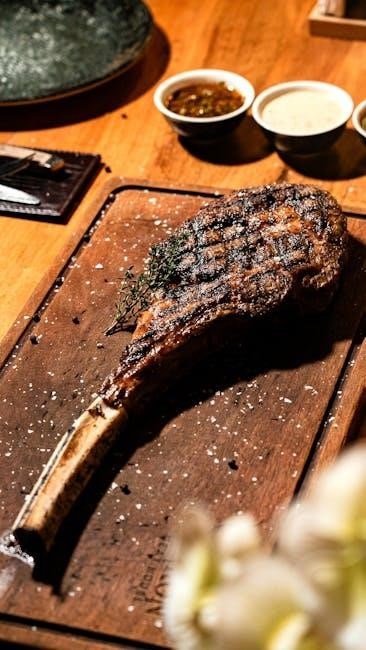
Some cooks enjoy incorporating onion powder or paprika for subtle variations. However, Omaha Steaks generally advises against complex rubs, believing the quality of the meat should shine through.
A simple blend of salt, pepper, and garlic powder is often all that’s needed to create a truly exceptional prime rib roast. Let the natural flavors of the beef be the star!
Troubleshooting Common Prime Rib Cooking Issues
A common issue is an unevenly cooked prime rib; ensure your oven temperature is accurate and consider rotating the roast during cooking; If the exterior is browning too quickly, tent it loosely with foil to prevent burning.
If the prime rib isn’t reaching the desired internal temperature, verify your meat thermometer is calibrated correctly. Remember, carryover cooking will continue to raise the temperature after removing it from the oven.
A dry roast often results from overcooking. Rely on a meat thermometer and don’t exceed your target doneness. Insufficient resting can also lead to dryness, as juices redistribute during this crucial step.
Finally, if the gravy is thin, create a slurry of cornstarch and water, then whisk it into the simmering pan drippings until thickened. Omaha Steaks resources offer solutions for these and other potential challenges.
Storing Leftover Prime Rib
Properly storing leftover Omaha Steaks prime rib ensures its quality and flavor are maintained. Allow the roast to cool completely before storing, typically within two hours to prevent bacterial growth.
Wrap the prime rib tightly in plastic wrap, then place it in an airtight container or a heavy-duty freezer bag. Refrigerated leftovers will remain safe to eat for approximately three to four days.
For longer storage, freezing is an excellent option. Properly wrapped, prime rib can be frozen for up to two to three months without significant quality loss. Thaw it slowly in the refrigerator overnight before reheating.
When reheating, consider using low and slow methods to retain moisture. Slicing the prime rib before reheating can also help it warm through evenly. Enjoy your delicious leftovers!
Pairing Omaha Steaks Prime Rib with Side Dishes
A perfectly cooked Omaha Steaks prime rib deserves equally impressive side dishes. Classic pairings include creamy au gratin potatoes, offering a rich and comforting complement to the savory roast.
Roasted asparagus or Brussels sprouts provide a vibrant green contrast and a slightly bitter note that balances the richness of the beef. Yorkshire pudding, a traditional accompaniment, is ideal for soaking up flavorful pan juices.
For a lighter option, consider a fresh salad with a vinaigrette dressing. Creamed spinach or horseradish mashed potatoes also enhance the prime rib’s flavor profile beautifully.
Don’t forget the wine! A bold Cabernet Sauvignon or a robust Merlot pairs wonderfully with Omaha Steaks prime rib, completing a truly memorable dining experience.
Omaha Steaks Prime Rib Cooking Chart Summary
This summary consolidates Omaha Steaks’ recommended cooking times and temperatures for prime rib roasts, ensuring optimal results. For rare doneness (120-130°F), allow 8-10 minutes per pound. Medium-rare (130-140°F) requires 10-12 minutes per pound.
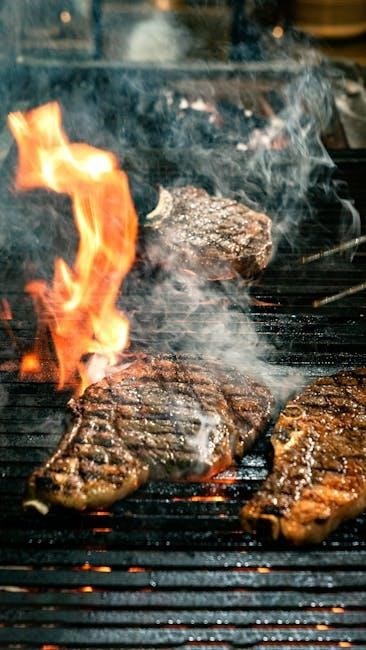
Those preferring medium (140-150°F) should cook for 12-14 minutes per pound, while medium-well (150-160°F) needs 14-16 minutes. Well-done (160-170°F) takes 16-20 minutes per pound.
Remember these times are estimates; a meat thermometer is crucial for accurate doneness. Initial high-heat searing (450-500°F) for 30 minutes, followed by reduced temperature slow roasting, is a common method.
The reverse sear method also yields excellent results. Always rest the roast for at least 15-20 minutes before carving to allow juices to redistribute, guaranteeing a tender and flavorful Omaha Steaks prime rib.
Write Reviews
Leave a Comment
No Comments & Reviews