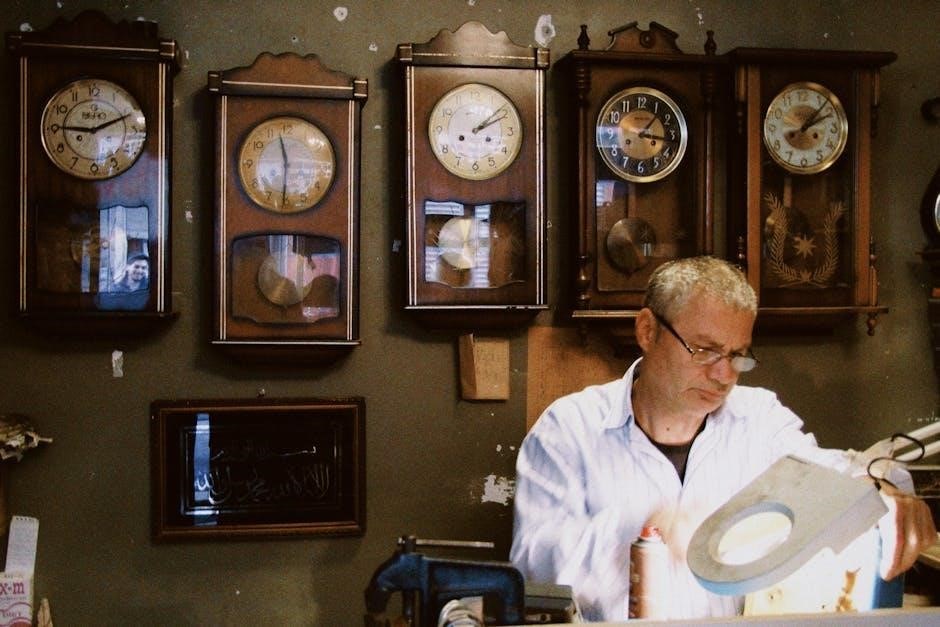
Manual clocks, born from 14th-century ingenuity, represent a pivotal shift from fluid, seasonal time to structured hours, impacting cultures like Japan profoundly.
What Defines a Manual Clock?
Manual clocks are distinguished by their reliance on a manually wound power source, typically a mainspring, to drive their intricate mechanisms. Unlike quartz or digital clocks, they don’t depend on batteries or electricity. These timepieces operate through a fascinating interplay of gears, escapements, and regulating devices – pendulums or balance wheels – all meticulously crafted.
The defining characteristic is the periodic need for winding, replenishing the energy stored within the mainspring. This contrasts sharply with the ‘set it and forget it’ nature of modern clocks. The earliest mechanical clocks, appearing in the 14th century, were entirely manual, marking a revolutionary departure from earlier timekeeping methods like sundials and hourglasses. They represent a tangible connection to the history of precision engineering and time itself.
The Appeal of Mechanical Timekeeping
Mechanical timekeeping, embodied by manual clocks, possesses a unique allure extending beyond mere functionality. It’s a fascination with intricate craftsmanship, visible gears, and the tangible sense of a living mechanism. This contrasts with the hidden workings of digital devices. The rhythmic tick-tock isn’t just a sound; it’s a heartbeat of engineering.
Furthermore, manual clocks represent a connection to history, echoing the ingenuity of 14th-century inventors. Their enduring presence, even amidst technological advancements, speaks to a desire for authenticity and a rejection of disposability. A resurgence of interest highlights their value as collectibles and art pieces, demonstrating a lasting appreciation for precision and the beauty of mechanical complexity.
A Historical Perspective
Mechanical clocks emerged in the 14th century, revolutionizing timekeeping and societal structures, notably influencing cultures like Japan’s transition to rigid hour systems.
Early Timekeeping Methods Before Mechanical Clocks
Prior to the advent of mechanical clocks, humanity relied on observing natural phenomena to gauge the passage of time. Sundials, utilizing the sun’s position, were prevalent, but their accuracy was limited by weather and nighttime. Water clocks, or clepsydras, measured time by the regulated flow of water, offering a degree of consistency but requiring frequent refilling and being susceptible to temperature changes.
Other methods included observing shadows, using candles with marked intervals, and tracking celestial movements. These early techniques were often imprecise and heavily dependent on environmental factors. The concept of time was often fluid and tied to daily routines and seasonal changes, rather than being divided into standardized, equal units. This contrasted sharply with the precision that mechanical clocks would eventually introduce, fundamentally altering societal perceptions of time itself.
The 14th Century: Birth of the Mechanical Clock
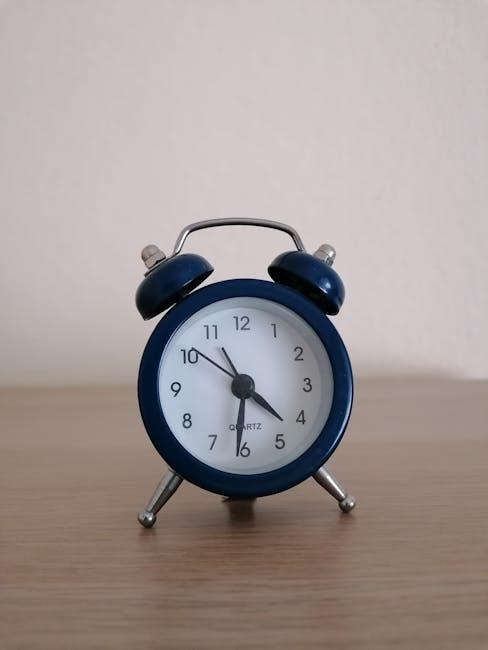
The early 14th century marked a revolutionary turning point in timekeeping history. This period witnessed the invention of the first mechanical clocks, alongside the increasing use of hourglasses for measuring durations. These early mechanical marvels weren’t the precise timekeepers we know today; they lacked dials and hands, primarily striking bells to announce the hour.
Driven by weights and utilizing a verge escapement, these clocks represented a significant leap forward from previous methods. Their emergence coincided with a growing need for standardized time in increasingly complex societies. While initially expensive and limited to public spaces like monasteries and town halls, they laid the foundation for the widespread adoption of mechanical timekeeping, forever changing how people perceived and organized their lives.
The Impact of Clocks on Society ─ Japan Example
The introduction of mechanical clocks to Japan in the mid-19th century, brought by Dutch traders, dramatically altered the nation’s traditional concept of time. Previously, Japanese society operated on a fluid system aligned with seasonal rhythms, a practice common globally before mechanical timekeeping. However, the rigid hour system imposed by European clocks caused initial frustration among Japanese workers.
This cultural clash prompted Japan to develop its own clock, the wadokei, adapting the technology to their needs. The adoption of standardized time profoundly impacted Japanese work habits and societal structure, mirroring the broader global shift towards a more punctual and scheduled existence driven by the precision of mechanical clocks.
The Evolution of Clock Technology
From the earliest mechanical clocks of the 14th century, a revolution in timekeeping began. These initial devices, though groundbreaking, were rudimentary compared to later iterations. The invention spurred continuous innovation, moving beyond simple hour-striking mechanisms to increasingly precise and reliable systems.
The development of components like improved escapements and, crucially, the pendulum or balance wheel, dramatically enhanced accuracy. Mechanical clocks weren’t merely time-telling devices; they fueled advancements in engineering and manufacturing. This progress laid the groundwork for the Industrial Revolution and, ultimately, the sophisticated timekeeping technologies we rely on today, demonstrating a continuous evolution from basic mechanics to complex precision.
Key Components of a Manual Clock
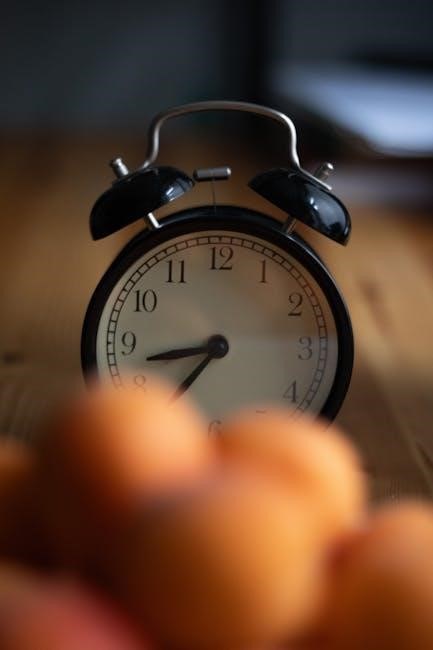
Essential parts – the mainspring, gear train, escapement, and pendulum/balance wheel – work in harmony to store, transfer, regulate, and display time accurately.
The Mainspring: Powering the Mechanism
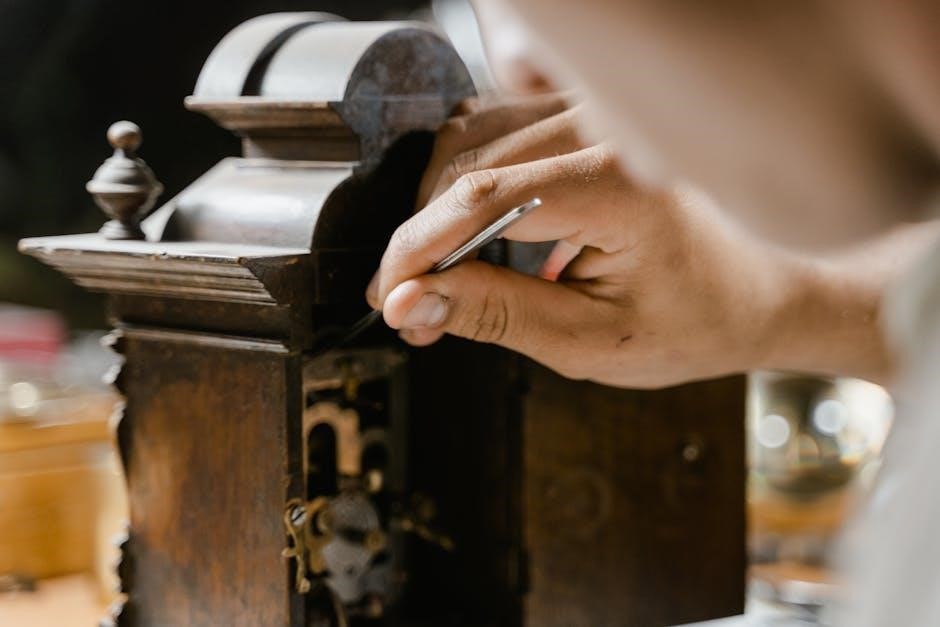
At the heart of every manual clock lies the mainspring, a tightly coiled ribbon of steel responsible for storing the energy that drives the entire timekeeping process. Unlike modern battery-powered or electrically-driven clocks, manual clocks rely entirely on potential energy accumulated within this spring.
When wound, the mainspring contracts, storing energy. As it slowly unwinds, it releases this energy in a controlled manner. This consistent, albeit diminishing, force is then carefully transferred through the clock’s intricate gear train. The quality and length of the mainspring directly influence how long the clock will run on a single winding, and its consistent power delivery is crucial for accuracy. Maintaining the mainspring’s integrity through proper lubrication and avoiding over-winding are vital aspects of clock maintenance.
The Gear Train: Transferring Power
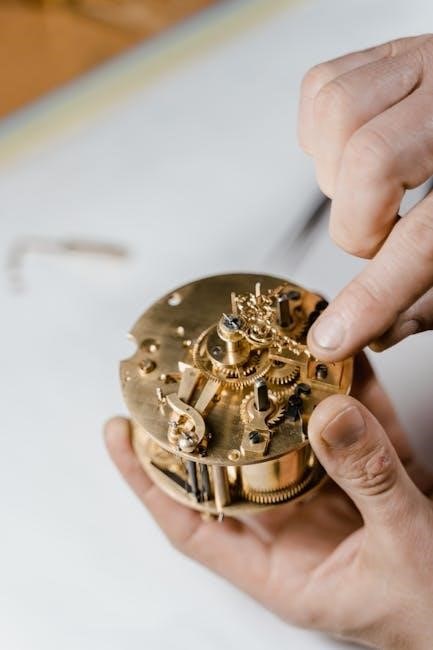
The gear train is the intermediary system within a manual clock, meticulously designed to transmit the power released by the unwinding mainspring to the escapement mechanism. Composed of a series of interconnected gears of varying sizes, it serves two critical functions: to regulate the speed of power delivery and to amplify the torque.
Each gear in the train rotates at a different rate, carefully calculated to translate the slow, powerful unwinding of the mainspring into the precise, consistent motion needed to advance the clock’s hands. The arrangement and precision of these gears are paramount to the clock’s accuracy. Proper lubrication and minimal wear are essential for the gear train to function efficiently, ensuring a smooth and reliable transfer of energy.
The Escapement: Regulating Time
The escapement is the heart of a manual clock’s timekeeping precision, acting as a controlled release mechanism for the power generated by the mainspring. It doesn’t simply allow the gears to spin freely; instead, it interrupts and regulates their motion in precise increments. This controlled release is what creates the characteristic ‘ticking’ sound of a mechanical clock.
Typically, the escapement consists of an escape wheel and a pallet fork. The pallet fork interacts with the escape wheel, allowing it to advance one tooth at a time. This intermittent motion is crucial, as it’s linked to the pendulum or balance wheel, ensuring consistent time intervals. Without a properly functioning escapement, the clock would either run too fast, too slow, or not at all.
The Pendulum or Balance Wheel: Timekeeping Precision
The pendulum or balance wheel serves as the timekeeping regulator within a manual clock, dictating the rate at which time passes. Early mechanical clocks often utilized pendulums, leveraging gravity and consistent swing periods to maintain accuracy. However, for portable timepieces like pocket watches, the balance wheel became essential.
A balance wheel, coupled with a hairspring, oscillates back and forth, storing and releasing energy with each swing. The frequency of these oscillations determines the clock’s tick rate. The escapement interacts directly with this oscillating element, receiving impulses and regulating the gear train. Precise manufacturing and adjustment of both the pendulum/balance wheel and escapement are vital for accurate timekeeping in any manual clock.
Types of Manual Clocks
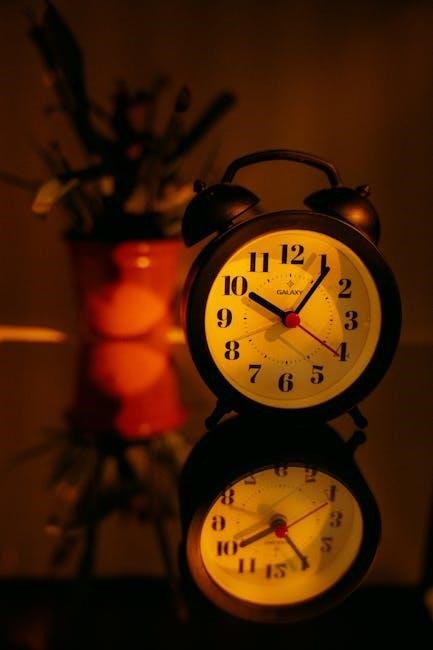
Manual clocks manifest in diverse forms – wall clocks, iconic grandfather clocks, portable pocket watches, and travel-designed carriage clocks – each showcasing unique craftsmanship.
Wall Clocks: A Common Household Feature
Wall clocks represent the most ubiquitous form of manual timekeeping, gracing homes for centuries with their functional elegance. Emerging alongside the broader adoption of mechanical clocks in the 14th century, they transitioned time measurement from public spaces – like church towers – into the domestic sphere.
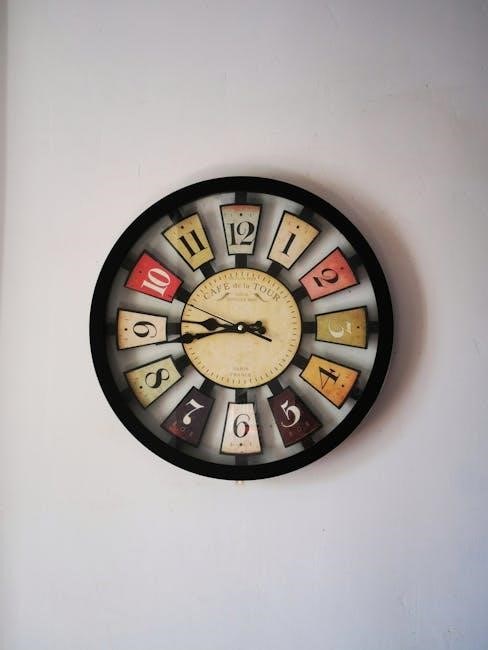
Initially, these clocks were substantial investments, symbols of status and a household’s embrace of the increasingly regimented concept of time. Over time, advancements in manufacturing made wall clocks more accessible, becoming a standard fixture in living rooms and kitchens. Their designs vary immensely, from simple, utilitarian faces to ornate, decorative casings reflecting prevailing aesthetic trends.
The consistent, visible display of time fostered a greater awareness of schedules and appointments, subtly reshaping daily routines. Wall clocks, therefore, weren’t merely devices for telling time; they were agents of societal change, embedding a precise temporal framework into everyday life.
Grandfather Clocks: Iconic and Elaborate
Grandfather clocks, also known as longcase clocks, stand as the most imposing and visually striking manifestation of manual timekeeping. Developed in the 17th century, they addressed the limitations of earlier pendulum-driven clocks, requiring significant height to accommodate the long pendulum necessary for accurate timekeeping.
These clocks quickly became symbols of wealth, refinement, and domestic stability. Their elaborate cases, often crafted from rich woods like mahogany or walnut, were frequently adorned with intricate carvings and decorative elements, transforming them into furniture pieces as much as time-telling devices.
The rhythmic tick-tock and hourly chime of a grandfather clock became a comforting presence in many homes, marking the passage of time with a sense of tradition and gravitas. They represent a high point in mechanical craftsmanship, embodying both precision engineering and artistic expression.
Pocket Watches: Portable Timekeeping
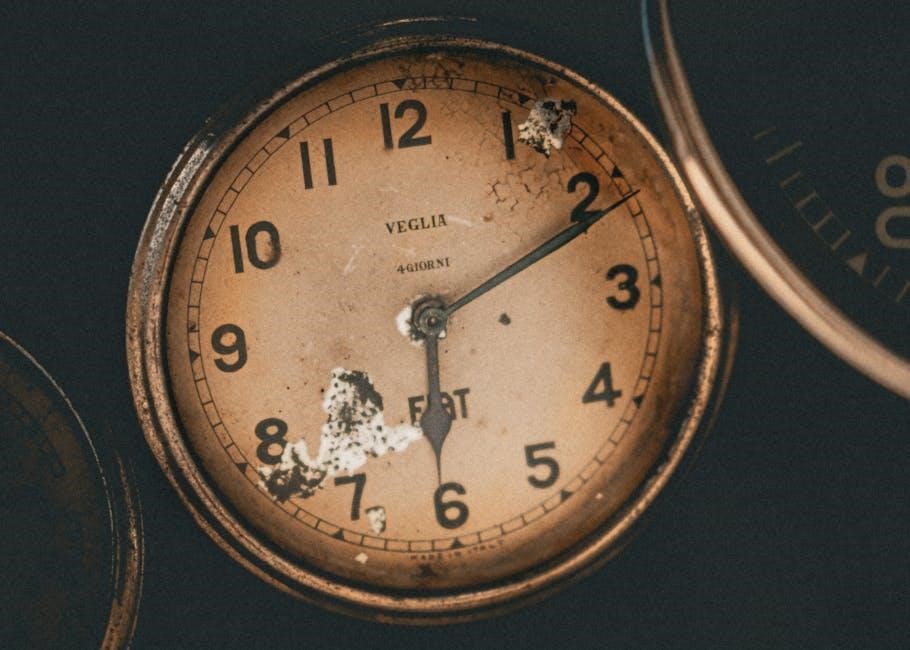
Pocket watches emerged as a revolutionary step in personal timekeeping, offering portability previously unavailable with larger manual clocks. Originating in the 16th century, these compact mechanisms initially lacked the accuracy of their larger counterparts, but continuous refinement throughout the centuries dramatically improved their precision.
Early pocket watches were status symbols, often lavishly decorated with engravings, jewels, and intricate enamel work, signifying the owner’s wealth and taste. As manufacturing techniques advanced, pocket watches became more accessible, influencing punctuality and scheduling in daily life.
They played a crucial role in coordinating activities across expanding trade networks and facilitated the development of standardized time across regions. The evolution of the pocket watch paved the way for the wristwatch, continuing the legacy of portable, mechanical timekeeping.
Carriage Clocks: Designed for Travel
Carriage clocks, appearing in the early 19th century, were specifically engineered to withstand the motion of horse-drawn carriages, offering reliable timekeeping on journeys. These compact clocks featured robust construction, often with gimbals – a pivoted support – to keep the mechanism level despite the vehicle’s movements.
Their design prioritized practicality and durability, encased in brass or mahogany, and frequently boasting repeating mechanisms to announce the hour. Carriage clocks became symbols of affluence and sophistication, accompanying travelers on long distances.
Beyond transportation, they served as elegant additions to homes, showcasing the ingenuity of mechanical engineering. The intricate mechanisms within these clocks represent a high point in manual clockmaking, blending functionality with aesthetic appeal.
Maintaining and Caring for Manual Clocks
Regular winding is crucial for operation, alongside periodic cleaning and lubrication to ensure smooth function; complex issues necessitate professional servicing.
Regular Winding: Keeping the Clock Running
Manual clocks, unlike their automatic or electric counterparts, rely entirely on stored mechanical energy to function. This energy is supplied by the mainspring, and regular winding is absolutely essential to replenish this power source. Without consistent winding, the spring unwinds, and the clock will eventually stop, halting the intricate dance of gears and escapements that mark the passage of time.
The frequency of winding depends on the specific clock and the strength of its mainspring. Some clocks may require daily winding, while others can run for several days, or even weeks, on a single full wind. It’s important to consult the clock’s documentation or a professional clockmaker to determine the appropriate winding schedule. Overwinding can be as detrimental as underwinding, potentially damaging the mainspring, so gentle and consistent winding is key to longevity.
Cleaning and Lubrication: Ensuring Smooth Operation
Manual clocks, with their complex network of gears and delicate components, require periodic cleaning and lubrication to maintain optimal performance. Dust, dirt, and old, hardened lubricant can impede the movement of parts, leading to inaccuracies and increased wear. Gentle cleaning, typically with a soft brush and specialized clock cleaning solutions, removes accumulated debris.
Lubrication is equally crucial. Specific clock oils are designed to reduce friction between moving parts without attracting dust. Applying these oils to pivot points and gear teeth ensures smooth operation and minimizes energy loss. However, excessive oil can also be harmful, so precision is vital. Professional servicing often includes thorough cleaning and lubrication, guaranteeing the clock’s continued accuracy and extending its lifespan significantly.
Professional Servicing: Addressing Complex Issues
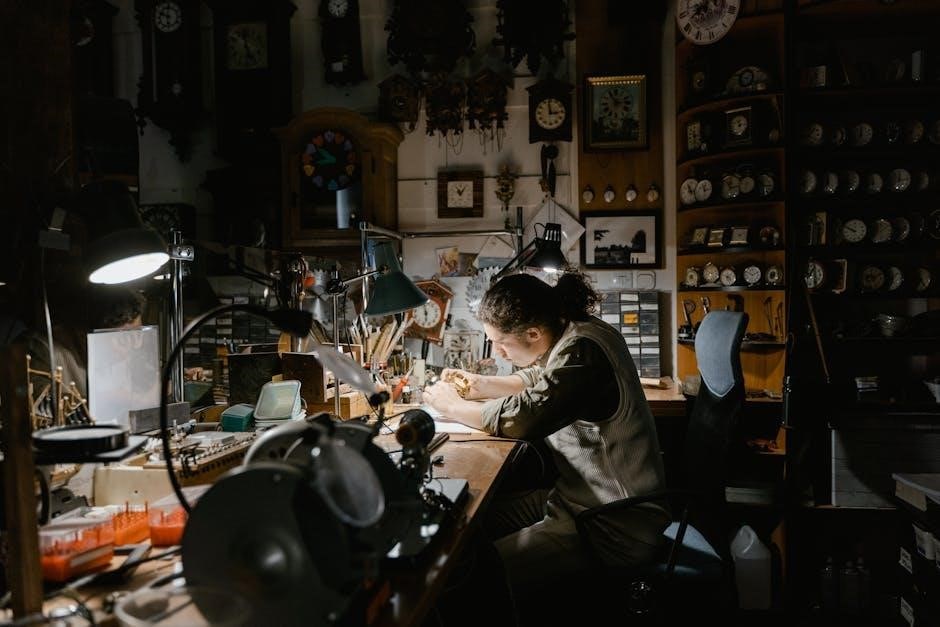
Manual clocks, despite diligent home care, occasionally require professional servicing to address complex issues beyond the scope of routine maintenance. Skilled horologists possess the expertise to diagnose and repair intricate problems within the clock’s mechanism. This includes issues with the escapement, gear train, or mainspring – components vital for accurate timekeeping.
A professional can also perform a complete disassembly, cleaning, and reassembly, ensuring every part functions correctly. They can identify worn or damaged components requiring replacement, restoring the clock to its original condition; Ignoring complex issues can lead to further damage and potentially irreversible problems. Regular professional check-ups, every 5-10 years, are recommended to preserve the clock’s value and longevity.
The Future of Manual Clocks
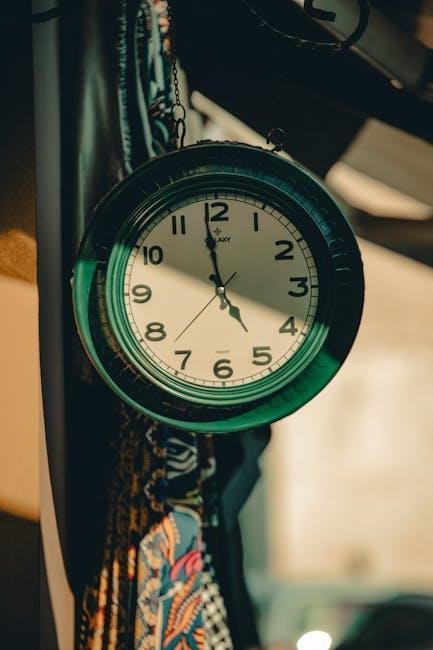
Manual clocks experience a resurgence as collectibles and art, fueled by appreciation for mechanical artistry and a counterpoint to digital timekeeping’s prevalence.
A Resurgence of Interest in Mechanical Watches
The appeal of manual clocks, and their smaller counterparts – mechanical watches – is experiencing a notable revival in the 21st century. This isn’t merely nostalgia; it represents a deliberate choice in a world dominated by digital precision. Consumers are increasingly drawn to the craftsmanship, complexity, and tangible connection to history that these timepieces offer.
Unlike quartz or digital watches, a manual clock requires regular winding, fostering a unique relationship between owner and object. This interaction elevates the clock beyond a simple time-telling device, transforming it into a cherished possession. Furthermore, the intricate movements visible through exhibition casebacks are celebrated as miniature works of art, attracting collectors and enthusiasts alike. This renewed interest positions manual clocks not just as functional items, but as statements of style and appreciation for traditional engineering.
Manual Clocks as Collectibles and Art Pieces
Beyond their function, manual clocks have ascended to the realm of collectibles and art, prized for their historical significance and intricate artistry. Elaborate examples, like the mechanical galleon clocks, demonstrate the ingenuity and decorative skill of clockmakers throughout history. These aren’t simply time-telling devices; they are miniature mechanical sculptures.
The value of these clocks extends beyond monetary worth, representing a tangible link to past eras and the evolution of technology. Collectors seek rare models, unique designs, and clocks from renowned makers, driving a thriving market. The preservation of these timepieces ensures that the legacy of mechanical timekeeping continues, celebrated not only for its practicality but also for its aesthetic and cultural importance, becoming treasured heirlooms and museum-worthy artifacts.
Write Reviews
Leave a Comment
No Comments & Reviews